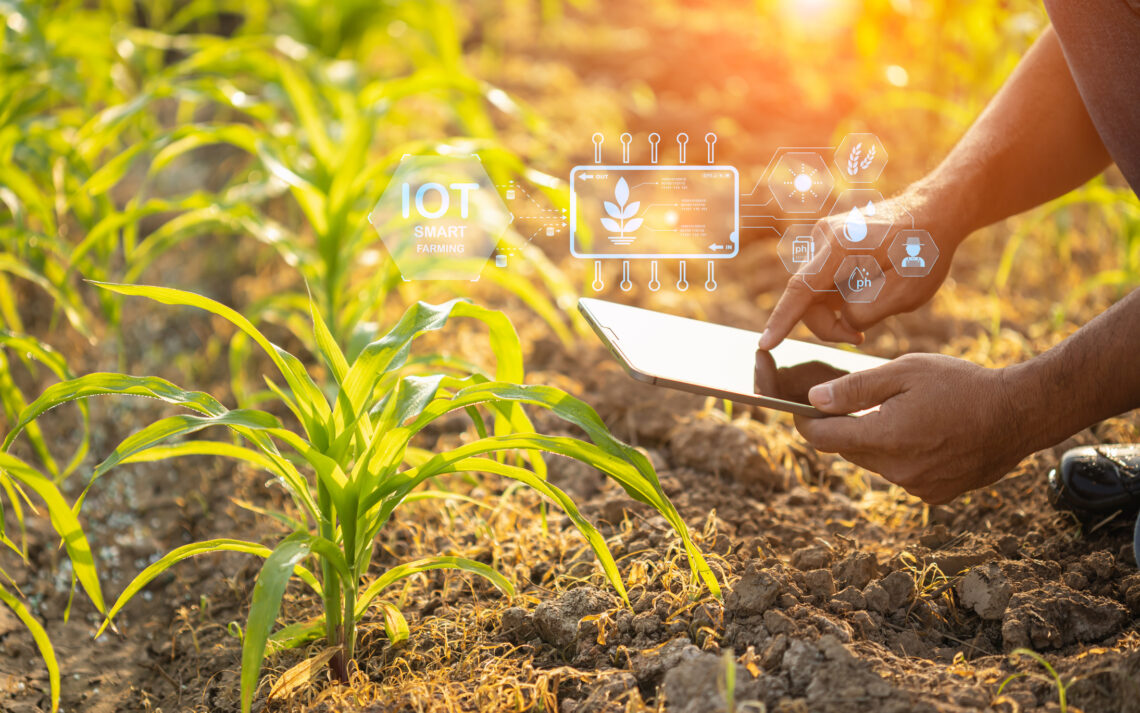
AI can help make farming more sustainable by reducing water and fertilizer usage. AI-powered systems can provide insights that help farmers make more informed decisions. According to a recent market analysis, the global market for AI in agriculture is projected to reach a valuation of USD 30.2 billion by the end of 2035, growing at a CAGR of 26% from 2026 through 2035. In 2026 alone, the industry size of artificial intelligence in Agriculture is estimated to reach USD 3.7 billion, underscoring the significant economic potential of these technologies.
With the rise of AI and the Internet of Things (IoT), leading manufacturers of soil sensors are now integrating these systems into their sensors. AI soil sensors become smart decision-makers, making it easy to use the data (moisture, nutrients) collected and weather forecasts to automate watering, applying the exact amount required, saving water, and preventing erosion.
AI soil health systems combine sensor data (such as soil moisture, temperature, and nutrient content) with AI algorithms that analyze this information in real time. Sensors placed across fields continuously monitor key soil health indicators, while AI processes this data, offering actionable insights. Systems like Farmonaut and other similar platforms help farmers optimize their irrigation, fertilizer application, and pest management by identifying trends and patterns not visible through manual observation. By integrating real-time sensor data with AI algorithms, farmers can predict and address potential issues such as nutrient deficiencies, soil compaction, and erosion before they impact crop health.
Outlined below are several case studies where Artificial Intelligence has proven to be effective and beneficial:
Case Study 1: Suresh Jagtap from India utilized a program developed by the Agricultural Development Trust (ADT) of Baramati in collaboration with Microsoft. The initiative, part of the “Farm of the Future” project, aimed to provide smallholder farmers with data-driven insights to optimize their farming practices.
Case Study 2: Australia’s Costa Group, in a world first, has been working with Israeli company Arugga AI Farming to deploy robotic pollination for truss tomato plants at its tomato glasshouse operation in Guyra, NSW. The robots, with the help of data collected using artificial intelligence, find flowers that are ready for pollination and imitate the pollination process as done in the traditional method with bumblebees.
Case Study 3: AI is quietly transforming the wine industry, especially in California, where many vineyards are turning to smart technology to boost the way they grow their crops. A great example is Napa Valley farmer Tom Gamble, who uses an autonomous tractor fitted with AI sensors to map his Capca vineyard.
This smart equipment gathers detailed information about the vines and soil, helping farmers decide exactly how much water to use, when to apply fertilizer, and how to manage pests more efficiently. The result is not just better productivity but more sustainable farming overall. In fact, vineyards across California using AI have seen about a 25% increase in yield and roughly 20% savings in water usage.
Case Study 4: In a groundbreaking advancement, John Deere’s See & Spray system leverages Artificial Intelligence and 36 high‑resolution cameras to scan nearly 2,500 square feet per second, applying herbicide only where weeds are identified. As the cameras sweep across the field, a machine‑learning model makes real‑time decisions to deliver precise, targeted spraying — resulting in an average 59% reduction in non‑residual herbicide use across more than one million acres last season.
Case Study 5: Drones equipped with computer vision technology and artificial intelligence have been helping the farmers with precision seeding, spreading fertilizers and spraying herbicides. Farmers in Japan are using drones to plant rice in low upland regions which is a challenging terrain as compared to the normal paddy fields. DJI has introduced this groundbreaking technology with DJI AGRAS T100 which boasts of overall operational efficiency by 66%. Drones enable farmers to monitor large agricultural areas efficiently, saving time and resources.
Computer vision technology in drones can identify livestock health, pests, automatic weeding, and other field conditions, reducing human observation efforts. The use of drones in the agriculture sector improves data accuracy, crop management, and advancements in the agricultural industry. Drones and AI technology provide valuable field insights, contributing to precision farming operations.